


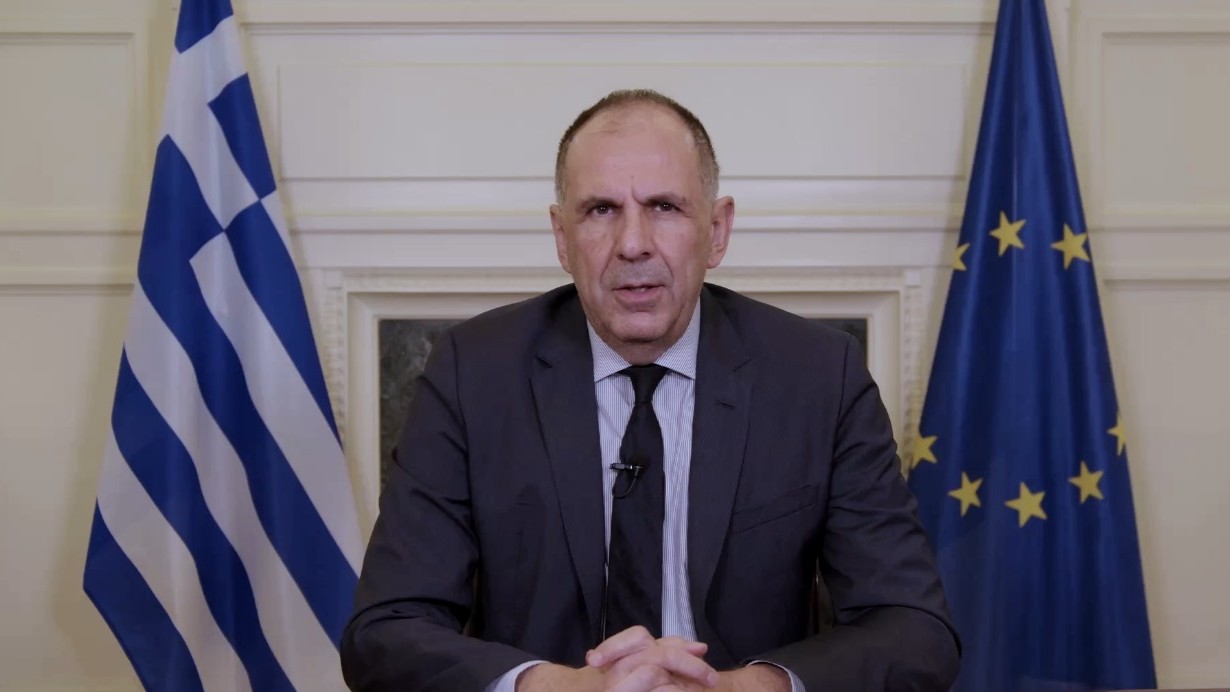
Before beginning, I would like to congratulate the organizers for conceiving and preparing this important gathering, and to thank them for the invitation to participate. My engagements abroad, regrettably, do not allow for my physical presence in the conference room. However, in the next few minutes, I will present certain positions and reflections relevant to the theme of the event.
As you all know and understand, we are living in an era marked by profound challenges to the international system – challenges that call into question the principles and certainties upon which the international community relied in the post-war and post-Cold War periods. We are all aware of what has occurred in recent years in Ukraine and Gaza. Equally known is the immense humanitarian catastrophe caused by the civil war in Sudan. Beyond these more familiar cases, however, there is a long list of active, frozen, or looming conflicts that pose a challenge to the security architecture at both the regional and international level.
Those who regularly follow my public statements can easily observe that, each time, the landscape has evolved and new facts emerge that must be taken into consideration. The world has become more unpredictable than ever, while international security is threatened or eroded daily by a combination of challenges - whether traditional, novel, or asymmetric. Even when such challenges may appear local in nature, in reality they collectively possess a universal dimension.
And although these supranational problems by definition require international cooperation and coordination, we are unfortunately witnessing an escalating deflation of trust in international organizations and International Law, accompanied by a prioritization of transactional approaches or narrowly defined ethnocentric perspectives.
Within this context, the Eastern Mediterranean obviously holds geopolitical significance and correspondingly faces significant challenges. A brief look at history, both ancient and contemporary, reminds us that this region has been the cradle of some of humanity’s most important civilizations, a region of interaction and coexistence for people, ideas, religions, intellectual and economic activity, but also a theater of bloody conflicts with different protagonists in different eras. This is precisely due to its pivotal location at the crossroads of three continents and its strategic role in both historical and modern economic and trade networks. In recent decades, the Eastern Mediterranean has been repeatedly affected by conflict - let me just refer to the illegal invasion and occupation of Cyprus by Türkiye, ongoing for 51 years, as well as to the heavy shadow cast by the unresolved and brutally violent rekindling of the Middle East issue.
Aware of the new realities in the international landscape, and also of the particularities of our immediate neighborhood, Greek foreign policy remains principled, firmly committed to the unwavering respect for International Law, including the Law of the Sea, the UN Charter and the UN Security Council Resolutions. We firmly believe in the values of dialogue and diplomacy as the most effective means for achieving feasible, mutually beneficial, and sustainable resolutions to all interstate or regional disputes. We apply these principles across all aspects of our foreign policy, both in our bilateral contacts and within the framework of the European Union and our participation in international organizations and fora. We have succeeded in ensuring that our country is internationally recognized as a reliable interlocutor and a pillar of stability in a particularly sensitive region of the world - a fact reflected, inter alia, in our landslide election to the UN Security Council for the 2025-2026 term.
Over the past two and a half years, we have been implementing a coherent plan of diplomatic action articulated across three levels:
- Consolidation of stability and calm in our region
- Consolidation of our national positions
- Capitalization on our enhanced diplomatic standing through significant active initiatives
At the first level, we focused on consolidating calm in our region. Included herein are developments regarding our relations with Türkiye and Libya. Without nurturing illusions, without disregarding the issues on which our views diverge completely from those of our eastern neighbor and without the slightest concession regarding our national interests and sovereign rights, we took a new step in our relations with Türkiye through the signing of the Athens Declaration in December 2023 and the establishment of a structured dialogue. This new approach has yielded tangible results, such as the minimization of violations of our national airspace, a significant reduction in migration flows, the strengthening of economic and trade cooperation, as well as the increase in tourism from Türkiye to the Greek islands.
Similarly with Libya, without overlooking the thorny issue of the null and void Turkish-Libyan memorandum, we are today the only European country that maintains open channels at the highest level with both sides in Libya, while at the same time having achieved a reduction in migration flows from the Libyan coastline, respect for the Greek median line in the proclamation of blocks for hydrocarbon exploration by Libya, as well as the reactivation of the technical committees for the delimitation of the Exclusive Economic Zone (EEZ) between the two countries.
At the second level, as I mentioned earlier, we have worked and continue to work towards the further consolidation of our national positions, through the formation of a network of alliances and the undertaking of targeted interventions. I would recall, among others:
- our active role in the Security Council,
- our participation in shaping the regulatory framework for European defense, with our national interests fully safeguarded,
- our contribution to upgrading the Cyprus issue on the agenda of the UN Secretary-General,
- the emergence of our country as an energy hub in the region, which contributes decisively to reducing dependence on Russian natural gas and advances the energy security of the European continent,
- the tangible upgrading of our relations with the United States, reflected, among other things, in the participation of major American energy companies in hydrocarbon exploration and extraction south of Crete and in the Ionian Sea,
- maintaining, at an extremely sensitive juncture, both our strategic relationship with Israel and our historical ties with the Arab world,
- the reactivation of the 3+1 cooperation format (Greece, Cyprus, Israel and the United States),
- the enhancement of our relations with India and the Gulf countries,
- the maritime spatial planning, which records, as part of the European acquis, the outer limits of the potential continental shelf and EEZ, as well as the designation of marine environmental parks in the Ionian and in the Aegean.
Finally, at the third level, we are capitalizing on our upgraded diplomatic standing through significant initiatives. Within this framework falls the Greek initiative for the establishment of a permanent multilateral regional structure in the Eastern Mediterranean, based on the conviction that cooperation in addressing common challenges can foster an atmosphere of mutual understanding and contribute decisively to the stability and security of the region. Through this initiative, Greece seeks to establish its position as a pillar of stability and an honest interlocutor in the region.
As I have emphasised on several occasions recently, the proposal is addressed primarily to the four Eastern Mediterranean states with which Greece shares maritime borders (Cyprus, Egypt, Türkiye and Libya), without excluding the future participation of other states. Universal acceptance of international law and full respect for state sovereignty constitute necessary preconditions for a country’s participation in the initiative. The five pillars of possible cooperation are: Civil Protection, Migration Management, Marine Environment Protection and, potentially at a second stage, Connectivity in the fields of energy and infrastructure, and the Delimitation of Maritime Zones.
As Minister of Foreign Affairs, I have undertaken to inform and explore the intentions of the parties regarding participation in this framework. Should there be a preliminary mutual understanding, a memorandum of understanding could be drafted, which would lead us to a first meeting for the planning of subsequent steps.
We are, of course, well aware of the problems that may arise in implementing this initiative It is a complex endeavor due to the longstanding and complex problems of the states involved. We are not turning a blind eye.
However, we are also well aware of the opportunities for cooperation, for harnessing the advantages of the Eastern Mediterranean’s geographic and geopolitical region in a manner beneficial to all states in the region, with the ultimate goal of promoting the prosperity of peoples and building a model of peace and prosperity in an area that has suffered so much from conflicts and disputes.
At this juncture, Greece is sending the message that we are not content merely to observe events. We shape them carefully, calmly, without any apprehension and with confidence.
Thank you very much.
December 5, 2025