


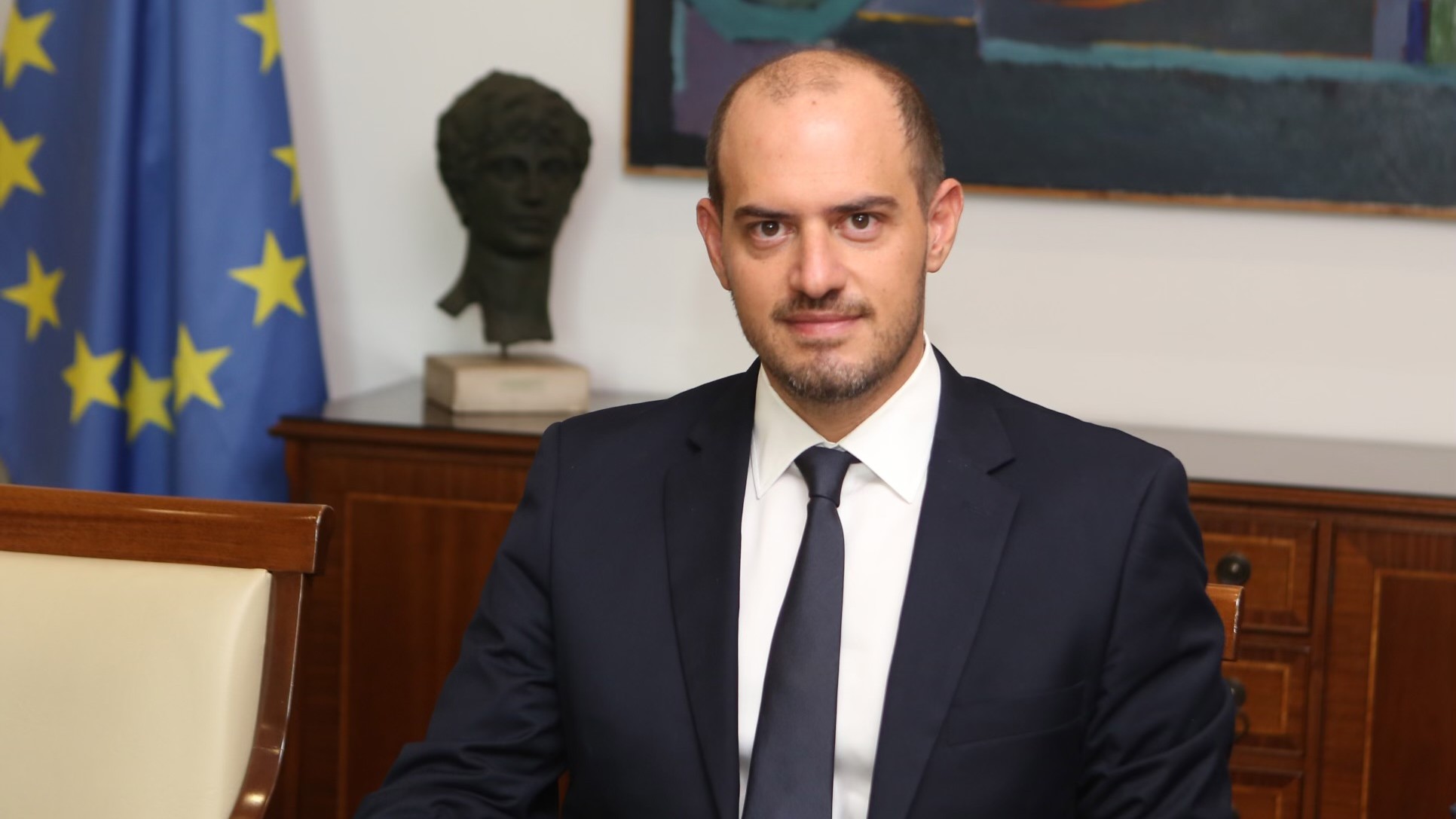
JOURNALIST: Deputy Minister, we are following the developments in the Middle East with concern. What role might Greece play if the war should escalate?
G. KOTSIRAS: The latest developments in the Middle East are indeed cause for concern. There is an urgent need for restraint on all sides, an immediate cessation of hostilities and protection of civilians, the return of the hostages, and unhindered flow of humanitarian aid. Diplomacy must be given room to stop the vicious cycle of violence.
From the very outset, Greece adopted a principled stance on the Middle East crisis, insisting on compliance with international law. As a pillar of stability in the wider region and a trusted interlocutor for all sides, our country has a constructive role in the efforts to achieve peace.
On the EU level, Minister of Foreign Affairs George Gerapetritis has taken important initiatives to promote peace. These include the establishment of a task force – with a mediating role – made up of Arab and European Ministers of Foreign Affairs. As an elected member of the UN Security Council, over the next two years Greece will continue to strive, with a strong sense of responsibility, to promote the peaceful resolution of disputes in our region and the world. Greece has strong diplomatic capital in today’s complex geopolitical environment.
At the same time, we remain vigilant. We are continuously monitoring the situation and preparing for all possible scenarios. And with great care we are looking out for the Greek citizens who live in the region. In this context, the Foreign Ministry’s Crisis Management Unit has been activated, and our embassies in Beirut and Tel Aviv remain fully prepared to provide further assistance to our fellow citizens if the need arises.
JOURNALIST: Do you think there is a risk of increased migration flows? Is the Greek-Turkish dialogue impacting the management of the migration issue?
G. KOTSIRAS: A potential overall escalation of the crisis in the Middle East carries the risk of increased migrant flows towards Europe. However, we should emphasise that, for the time being, there is no such issue for Greece. Of course, we are on constant alert.
We place special emphasis on effective guarding of Greece’s borders, implementing a strict but fair policy. The fence in Evros is moving ahead. Our maritime borders are protected. We have the support of our European partners, who recognise that Greece’s borders are also European borders. We insist on a common European migration policy, implementation of the Migration and Asylum Pact, strengthening of the EU’s external borders, and cooperation with third countries to facilitate returns.
As the Prime Minister said during the press conference following the conclusion of the European Council Meeting in Brussels, the fact that an agreement was reached on the conclusions on the migration chapter is a very positive development. The fact that, during these years, Europe’s migration policy has changed and come much closer to Greece’s positions is now self-evident, as we can see from the conclusions of the European Council. As Kyriakos Mitsotakis stressed, Europe is slowly but steadily moving in the right direction, which undoubtedly also serves Greece’s positions.
Finally, allow me to point out that the gradual Greek-Turkish rapprochement being attempted over the past fifteen months has had a positive impact on the migration issue. Illegal arrivals from Turkey have been limited. The cooperation between Greek and Turkish authorities has borne fruit in the fight against trafficking networks.
JOURNALIST: To what extent is the improvement in Greek-Turkish relations contributing to the talks on the resolution of the Cyprus problem?
G. KOTSIRAS: After a long period of inaction, we succeeded – through intensive diplomatic activity, and always in full coordination with Nicosia – in making the Cyprus problem a key priority for the United Nations. We believe that improving Greek-Turkish relations supports the efforts to resolve the Cyprus issue. Greece is at the disposal of the UN, prepared to contribute to the next steps. The division of the island is unacceptable. We must exhaust every possible path to finding a just and viable solution in the framework of the UN Security Council’s resolutions.
JOURNALIST: When do you expect to see completion of the digitalisation of the passport issuing procedure for Greeks abroad, and how will the diaspora benefit.
G. KOTSIRAS: With the passing of Article 60 of Law 5143/2024, the government of Kyriakos Mitsotakis took another important step for Greeks abroad. With the new procedure, Greeks abroad will be served more quickly and effectively, since we will be able to significantly reduce the time it takes to issue a passport. In the coming time, the competent services of the co-competent ministries will continue to cooperate on elaborating the parameters of the technical implementation of the provision. All of the above are needs that we took into account when preparing the Foreign Ministry’s Strategic Plan for Greeks Abroad 2024-27, and we are showing in practice that Greeks Abroad are a top priority in the planning of the government’s work.
October 21, 2024