


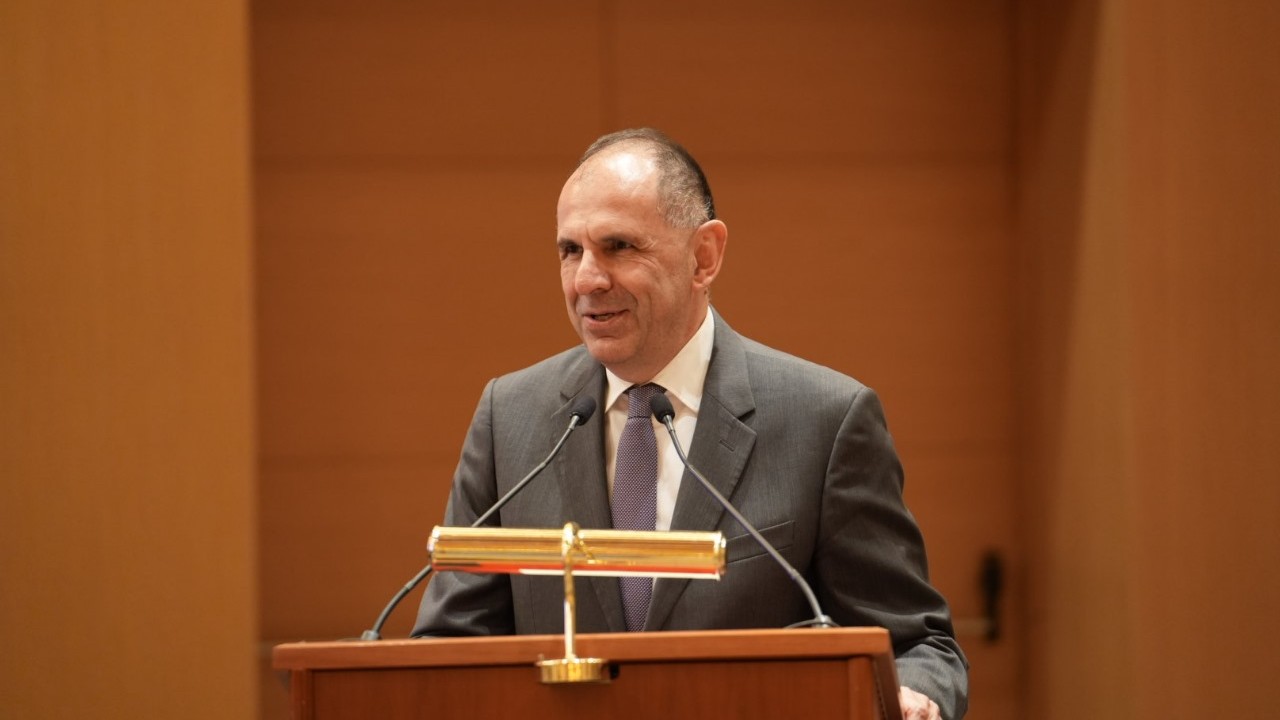
It is a great honour to welcome you to Chania, on the island of Crete. An island which is long associated with the ideals of democracy and freedom, from its struggle for independence to the heroic resistance against tyranny during World War II. It is a particular privilege for Greece to host the distinguished Committee on Political Affairs and Democracy of the Council of Europe. The Council of Europe has stood as the guardian of democracy, freedom, human rights and the rule of law across the European countries that participate in it (today 46).
Regrettably, this meeting occurs at a time of profound instability, as key pillars of the international order established after the Second World War are under severe strain —if not altogether crumbling. Indeed, one of the most respected pillars —the norm against territorial conquest— was blatantly violated when Russia invaded Ukraine, occupying entire regions of the country.
The Council of Europe, only days after the invasion, responded decisively by expelling Russia from the organization, affirming that the defense of core principles cannot be compromised. At the same time, other actors such as the European Union and the United States imposed a series of sanctions aimed at countering Russian aggression. Europe —and indeed the entire world— stands at a pivotal crossroads. If these faits accomplis are accepted, the language of revisionism will once again enter the political discourse, with potentially immeasurable consequences.
In this context, the role of the Council of Europe as protector of democracy in the European Continent is pivotal, considering the connection between authoritarianism and foreign aggression. The rise of populism, the spread of disinformation —often accelerated by the misuse of emerging technologies— and the erosion of legislation protecting fundamental freedoms, pose serious threats to democratic resilience. Indeed, democratic backsliding in various European countries has been a persistent concern, regularly documented and brought to attention by the Council of Europe’s rapporteurs.
The Council of Europe’s unwavering commitment to human rights —anchored in the European Convention on Human Rights— is reflected in the vital work of your Committee. By fostering dialogue, raising awareness, and debating political developments across member states, the Committee plays a key role in highlighting challenges to democracy and the rule of law. Through its political oversight and parliamentary diplomacy, it helps to detect emerging risks that could undermine compliance with the Convention and the fundamental freedoms it guarantees.
We need to remember. Gaza, Sudan, Libya and elsewhere is not geographically part of Europe. Yet, respect of ecumenical human rights is our responsibility, irrespective of whether violations might occur. Not only because we may witness the consequences of such violations on our external borders, but predominantly because Europe must stand for ecumenical humanitarianism. Concessions to fundamental human rights are simply unacceptable for us Europeans.
Greece, the ancient cradle of democracy and member of the Council of Europe since 1949, remains firmly committed to the values and standards that this Organization upholds and promotes. Against the backdrop of successive crises, geopolitical complexities and contemporary challenges, my country continues to work systematically toward a democratic Europe —one that stands as a model for human rights and the rule of law. These principles are essential prerequisites for a Europe with a strong and principled presence and footprint on the international stage.
I have one call for you today. Let’s stay united. Under current adverse circumstances, each one of us can do little for world peace and prosperity. But together we can perform miracles. As Aristoteles put it “The whole is greater than the sum of the parts”. This is us.
May 26, 2025