


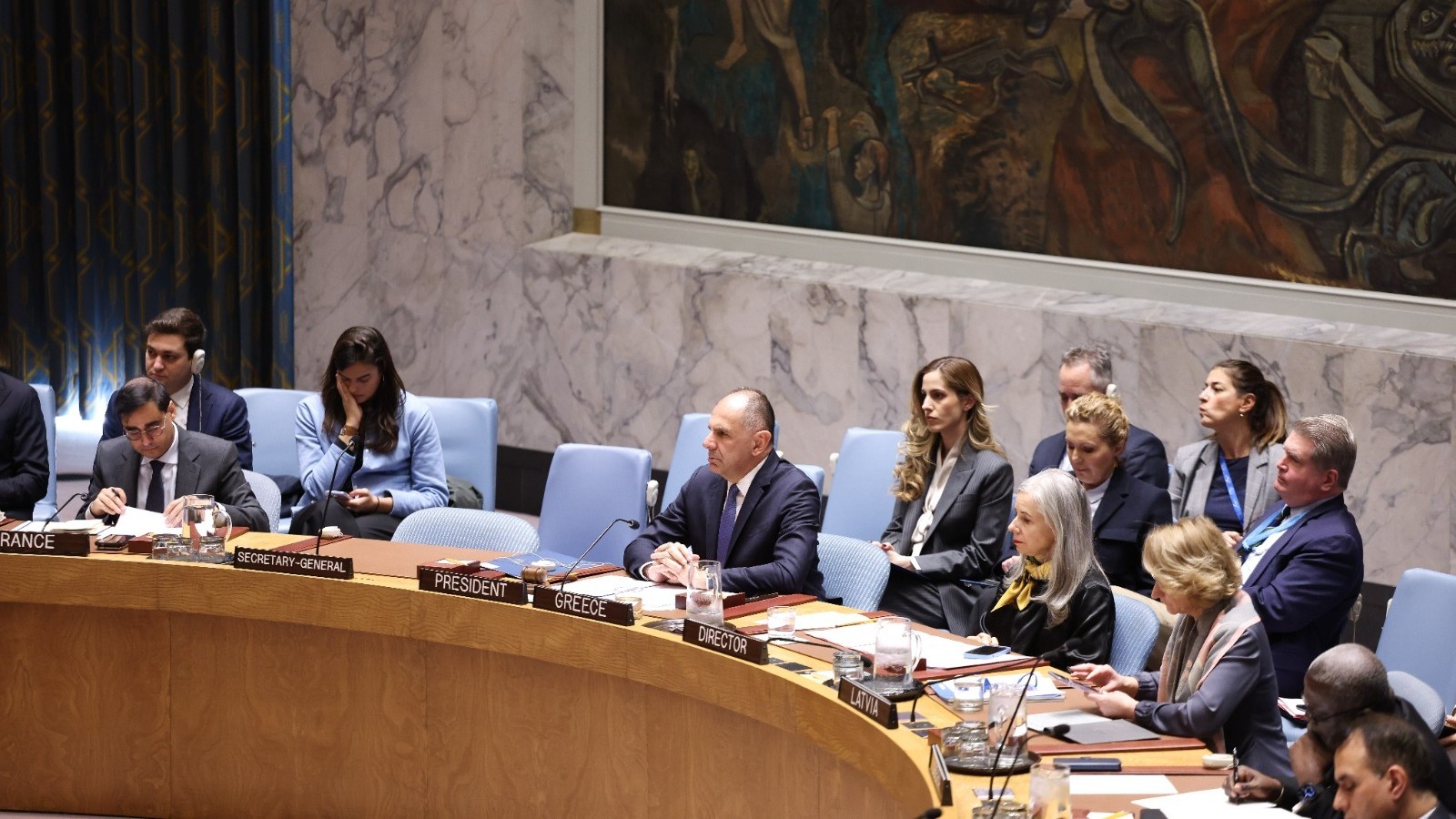
I shall now make a statement in my capacity as the Minister of Foreign Affairs of the Hellenic Republic. First of all, I thank Vanessa Frazier, Special Representative of the Secretary General for Children and Armed Conflict, Catherine Russell, Executive Director of UNICEF, Jainaba Jagne, African Union Special Envoy for Children Affected by Armed Conflict, and Bethany Ellis, Director of Watchlist on Children and Armed Conflict, for their insightful briefings.
Thirty years ago, the landmark report presented by Graça Machel to the United Nations General Assembly, shed light on the devastating consequences of war for children. It also established a compelling mandate: The protection of children must be central to conflict prevention, peacebuilding, and recovery.
This mandate has made significant progress. The establishment of the Office of the Special Representative on Children and Armed Conflict, the Monitoring and Reporting Mechanism, and the Security Council Working Group has helped develop a robust response to the plight of children in armed conflict and coordinate international action.
Through sustained advocacy and engagement, including the implementation of action plans with parties to conflict, thousands of children have been removed from the theaters of conflict, and concrete commitments have contributed to the prevention of violations and abuses.
Yet these achievements stand in stark contrast to the unprecedented scale and complexity of violations and abuses against children reported in recent years. This year's annual report of the Secretary-General sounds the alarm, as a record number of children had their rights violated in conflict during the previous year, the highest number since the mandate was established.
Moreover, the changing nature of conflict demands that we adapt our responses. As in every aspect of our lives, digital technologies create new risks and raise additional concerns in the field of child protection. Children are recruited and exploited through smartphones. Their natural affinity for technology becomes a weapon against them.
At the same time, digital technologies can also help protect children. Technology-enabled education promotes digital literacy and skills and empowers children to recognize online threats. There is a shared responsibility to close the digital divide and help countries strengthen their capacity to respond to new threats.
Greece attaches particular importance to protecting children in the digital environment while also enabling them to benefit from new technologies.
Guided by the firm conviction that the integrity and effectiveness of the Children and Armed Conflict mandate must be preserved, Greece proposed a Resolution that safeguards these foundations while introducing a critical new dimension: the impact of digital technologies on children and ways to counter it, as well as ways to harness these technologies for the benefit of the children.
In a particularly welcome development, the Security Council unanimously adopted the Resolution a few days ago, with 93 Member States co-sponsoring it. We are greatly encouraged by this outcome and would like to once again thank all Member States for their support, which has helped advance this important new dimension of the CAAC mandate.
A few thoughts on the way forward:
We must maintain and strengthen partnerships. Child protection requires closer cooperation between Member States, the United Nations, regional organizations, and civil society. It should also be systematically integrated into conflict prevention, mediation, peace process, and recovery strategies.
We must also give due consideration to the voices of children and young people in shaping our policies and responses, with appropriate safeguards to protect their safety, dignity, and well-being.
We need to reinforce engagement with parties to conflict. Principal dialogue, including through action plans, can deliver meaningful results. Their effective implementation requires clear responsibilities, measurable steps, sustained engagement, and support for the release and reintegration of children.
We should address implementation challenges by safeguarding the monitoring and reporting mechanism, strengthening field-to-field expertise and partnerships with local actors, and facilitating humanitarian access.
We must also ensure that commitments are matched by adequate and predictable resources so that monitoring, reporting, and child protection capacities are maintained, particularly in the field. Accountability and prevention must be supported by consistent political engagement and effective national justice mechanisms.
Through the “Prove It Matters” campaign, which Greece champions, a child delivered a simple but very powerful message: “A protected child is a secure future”.
Let these words guide our collective action. Let us demonstrate through sustained political will, concrete investments, and genuine partnerships, that the protection of children is not simply an aspiration, but an indispensable foundation for lasting peace.
Thirty years after the establishment of the Children and Armed Conflict mandate, let us ensure that the next thirty years will be remembered not for the promises we made, but for the violations we prevented and the children we protected.
Thank you.
October 26, 2026