


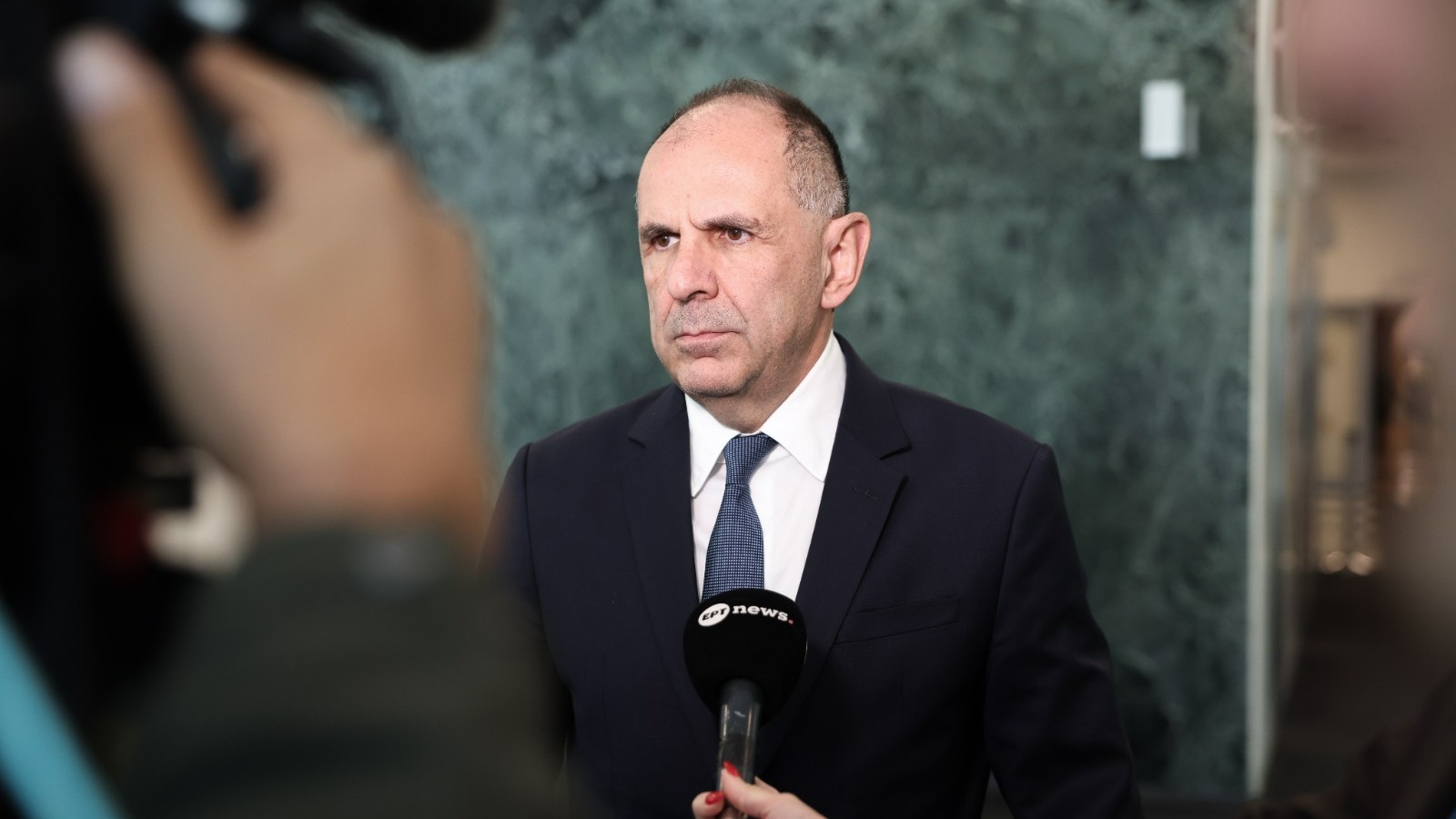
I had the opportunity to discuss with the UN Secretary-General, António Guterres, the course of the Organization, as well as all the major crises currently unfolding around the world. We had the opportunity to discuss Ukraine, the Middle East and Africa. Our shared assessment was that we are currently at the most critical juncture for global peace and prosperity since World War II. Bold decisions must be taken in order to seek to de-escalate crises, bring wars to an end, address the energy and food crises, and enable peoples to work and live in peace.
On the other hand, it is of great importance that the United Nations remain at the forefront of efforts to promote global peace. The United Nations was established in the aftermath of World War II with the aim of bringing peoples together and ensuring that a new major conflict would never occur. This must always remain at the forefront of our minds. The peaceful settlement of disputes remains the most important achievement attained in the aftermath of World War II.
The Secretary-General and I also had the opportunity to discuss other issues, including the Cyprus Issue, on which developments are ongoing. Current circumstances call for the commencement of more formal discussions on the substance of the Cyprus Issue. We must not lose the momentum built up during António Guterres’s tenure. We must build on it. UN Security Council resolutions are binding and must be fully respected by all, so that the island can finally be reunified.
Furthermore, we discussed issues relating to maritime security. I made particular reference to matters concerning unlawful maritime delimitations. We must all recognise that the seas and oceans are neither a privilege nor anyone’s private domain. There are rules governing relations between neighbouring coastal States, and these rules must be respected. It is no coincidence, moreover, that the rules governing international law of the sea are among those to which the largest number of United Nations Member States have subscribed. Respect for these rules is an essential condition for peace and prosperity.
As far as Greece is concerned, I wish to be absolutely clear: Greece will not tolerate any unlawful actions with regard to maritime zones. We will remain steadfast in our adherence to international law as the only means of settling disputes. Greece has always maintained that neighbouring countries should work together to resolve their differences. This, however, does not mean that any aggressive actions contrary to international law can be tolerated.
JOURNALIST: Minister, today there were telephone conversations between you and your Egyptian counterpart, as well as between Hakan Fidan and his Egyptian counterpart. How do you comment on the leaks and reports suggesting that the Turkish side is trying to win Egypt over, following its attempt to do the same with Haftar?
G. GERAPETRITIS: First of all, I would like to highlight the very strong, strategic and brotherly relationship we have with Egypt, which continues to develop across all areas. It is extremely important that Egypt’s Permanent Representative to the United Nations stood by my side here in New York when we delivered the statement concerning the illegal and null and void Turkish-Libyan Memorandum. We share a very strong common understanding with Egypt regarding the universal application of international law. We must all understand that maritime zones are not an arena for bidding. They are an area in which international law must prevail. Otherwise, we will reach an untenable situation that will be extremely detrimental, not only to the countries bordering the Mediterranean or other seas, but also to global trade, food security, energy security and the protection of the oceans.
Thank you.
October 28, 2026