


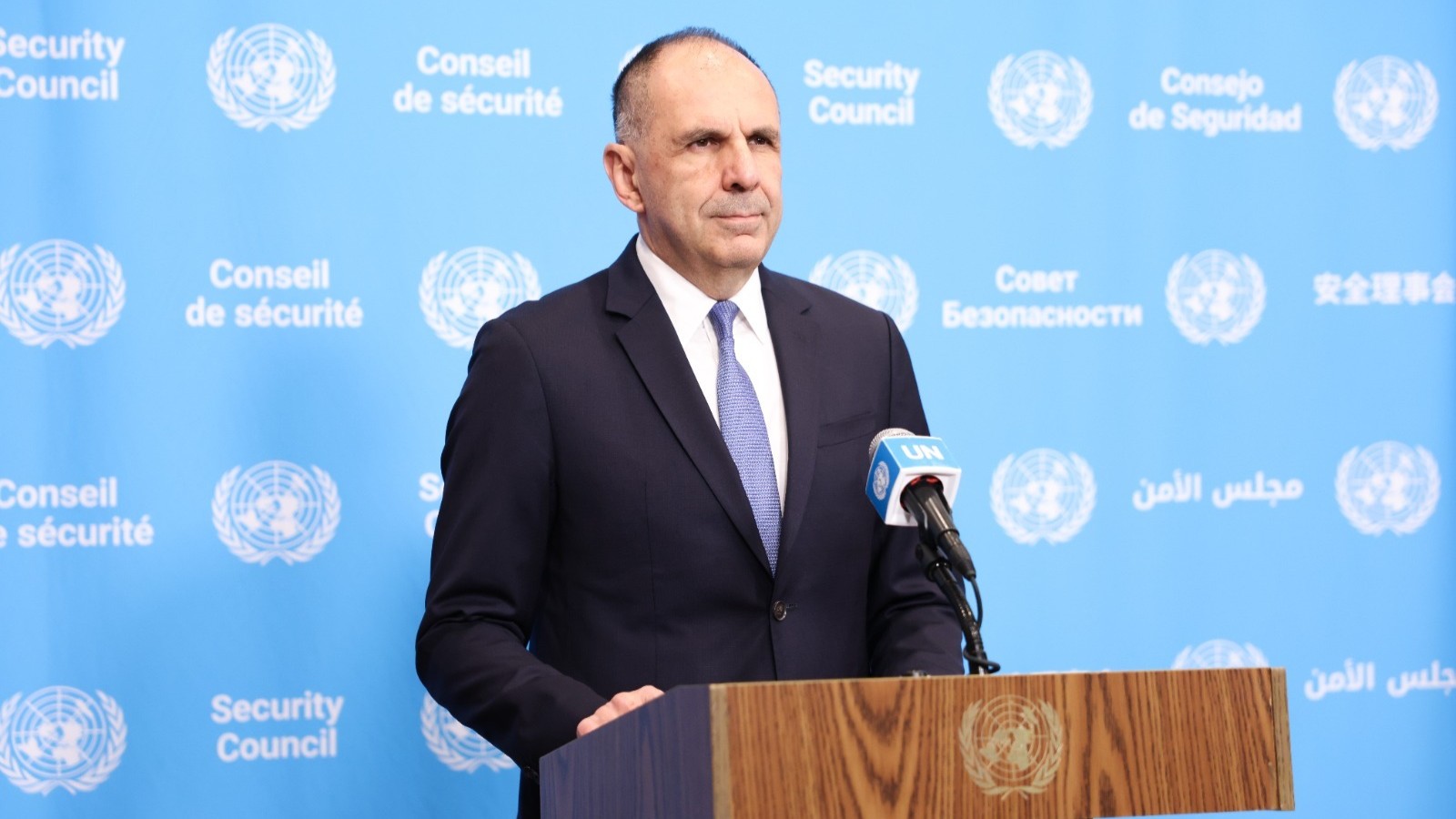
Today, the Security Council will address one of the most urgent and direct threats to international peace and security: the protection of children from the horrors of armed conflict.
Across the world, children are not merely caught in the crossfire of war. They are deliberately deprived of the protection that they are entitled to under international law. They continue to pay an unbearable price for conflicts they did not start and cannot end.
Thirty years after Graça Machel's landmark report on the impact of armed conflict on children, we must recognize both the progress achieved and the pressing challenges that remain.
The “Children and Armed Conflict” agenda has become one of the Council’s most important protection frameworks. Through monitoring, reporting, engagement with parties to conflict and the dedicated work of the Security Council “Working Group on Children and Armed Conflict”, it has secured concrete commitments, it has achieved the release and reintegration of thousands of children associated with armed forces and armed groups. It has also promoted accountability for violations committed.
But progress cannot be measured by the strength of our commitments alone. It must be measured by the safety of children on the ground.
And that reality remains deeply alarming.
The international community cannot – must not – accept grave violations against children as an inevitable consequence of war. Nor can we allow impunity, political divisions, or competing priorities to weaken our collective resolve.
As we enter today's briefing, I wish to emphasize the following points:
We must turn commitments into measurable action.
We must ensure accountability. Accountability must replace immunity and impunity.
We must keep prevention at the heart of our efforts.
And, just as urgently, we have to address contemporary challenges.
The unanimous adoption, a few days ago, of Security Council Resolution 2832 (2026), tabled by Greece and supported by almost 100 Member States, represents an important step forward. We thank the Security Council and our co-sponsors for their support.
Today, children face threats not only on the physical battlefield but also in the digital space. In fact, the battlefield has expanded to include the digital space. Children can be recruited, coerced, and exploited through online platforms. A child recruited through a digital platform is no less a victim than a child recruited on the battlefield. A violation facilitated by technology is equally grave than one committed by conventional means.
Technology must never become another weapon against children. On the contrary, it must be used to protect them.
Resolution 2832 sends a clear message: the protection of children must keep pace with the changing nature of warfare. The means of committing violations may evolve, but our obligations to prevent them and protect children remain unchanged. And technology, through education, can become an agent for good.
As the Prime Minister of Greece, Kyriakos Mitsotakis, emphasized in his address to the United Nations General Assembly, the rapid development of artificial intelligence and emerging technologies must be accompanied by responsibility, effective safeguards, and a clear commitment to protecting children. Greece has lately taken legislative steps in this regard.
Protecting children in armed conflict transcends politics. It is a legal obligation, a moral imperative, and a shared responsibility.
Our message today is simple:
The protection of children must never be negotiable.
The Security Council must speak with one voice — and, most importantly, act with one purpose.
Thank you.
October 26, 2026