


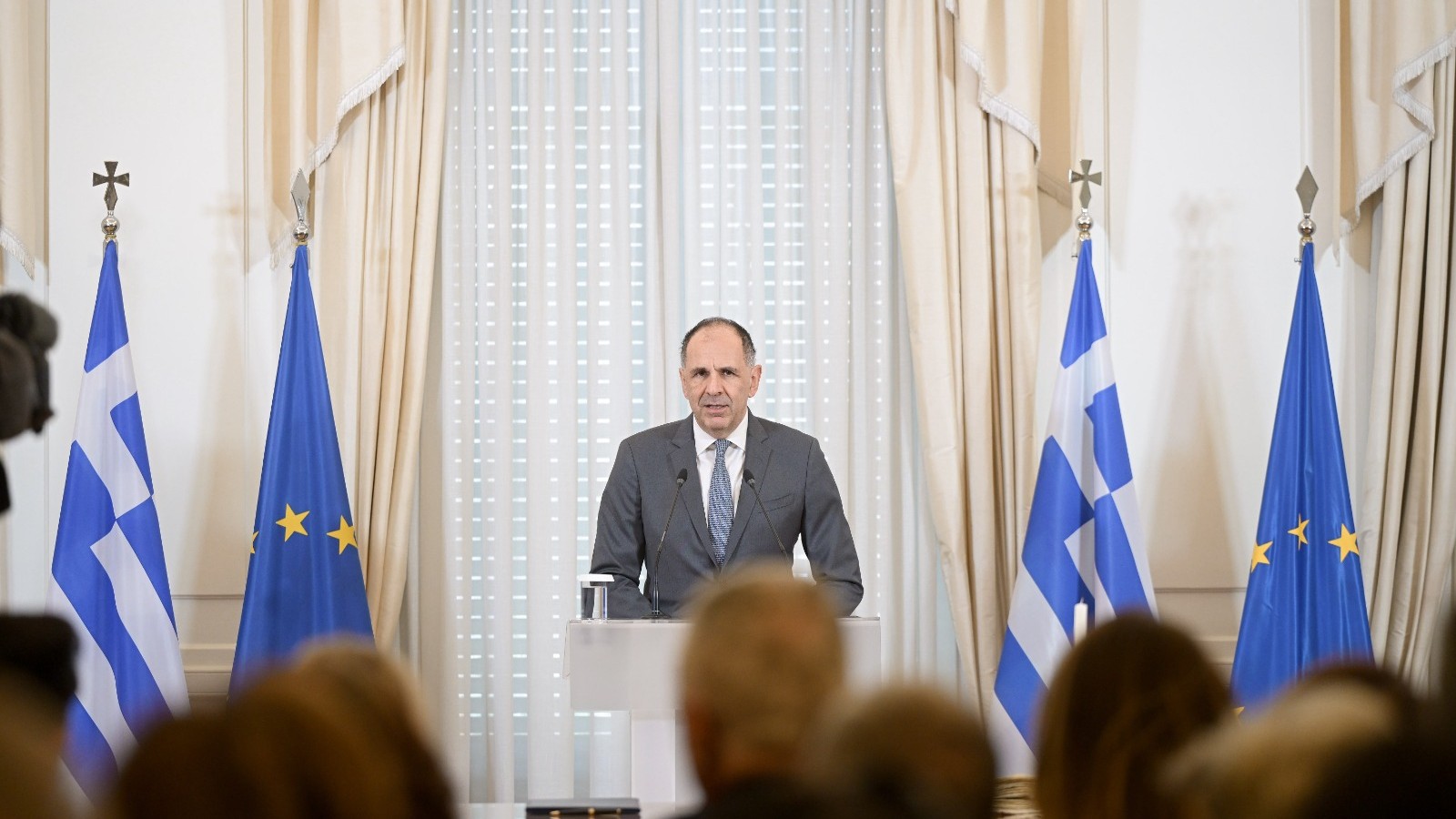
Your Excellency, Mr. President of the Hellenic Republic,
It is a great honour to welcome you today to the Ministry of Foreign Affairs on the occasion of the swearing-in ceremony of the 30th Class of Candidate Embassy Attachés, which we are particularly pleased to welcome. I would like to express my sincere gratitude for the appreciation and interest you have always shown in the Diplomatic Corps, particularly the younger generations of diplomats. The Hellenic Diplomatic Academy has been making significant efforts to attract young people of the highest calibre. Today is indeed a very important occasion for the Ministry of Foreign Affairs, as we welcome highly qualified young diplomats into our Diplomatic Service, confident that they will rise to the demands of their important duties.
On this occasion, I would particularly like to thank the Hellenic Diplomatic Academy, its staff and, above all, its Director, Ambassador Diamessis, for the considerable efforts made in recent years to enhance the training provided by the Diplomatic Academy, which encompasses not only the training of Candidate Embassy Attachés but also the continuing professional development of our diplomats. At a time when developments are unfolding at an increasingly rapid pace, it is essential to ensure that the Diplomatic Corps receives the most appropriate education and training possible.
I would especially like to highlight the efforts undertaken by the Ministry of Foreign Affairs in recent years to promote greater diversity within the Diplomatic Corps. The members of the 30th Class, Mr. President, come from a wide range of academic disciplines, enriching the Diplomatic Corps. Their backgrounds extend beyond the traditional fields of international relations and law to include the natural sciences, such as chemistry, as well as architecture and disciplines not immediately associated with diplomacy, such as archaeology.
This is essential, not only because it contributes to a holistic approach to diplomacy, which is more necessary today than ever before, but also because diplomacy today is conducted in increasingly varied ways, through different means and in pursuit of different objectives, all of which converge towards one overarching goal: the defence of our national interests and national rights. Cultural diplomacy, energy diplomacy, economic diplomacy, and public diplomacy are all components of a single whole: Greek diplomacy, which seeks to strengthen our country.
I would particularly like to address our new Embassy Attachés and point out that they have both an advantage and a disadvantage ahead of them. The disadvantage, unfortunately, is that they are entering the Diplomatic Service at a time of profound upheaval in the international security architecture and the international order as it has been established since the Second World War, with wars sending shockwaves across the international stage, more armed conflicts around the world than ever before, and crises of a global nature, such as the climate, food and energy crises, which call for a different model for conduct of traditional diplomacy. We are confident that, with the multidisciplinary education they have received and their training at the Hellenic Diplomatic Academy, they will be fully capable of fulfilling these duties.
The advantage is that they are entering the Diplomatic Service at a time when Greece is exceptionally strong diplomatically on the international stage. Its voice is heard. It is a voice of consistency and stability, reflecting international law and international multilateralism. Today, Greece enjoys an international standing it has never had before, and for this reason our new Embassy Attachés will be joining an already established system of Greek foreign policy. Mr. President, we have taken steps to ensure that, following the major economic crisis, which resulted in severe understaffing within the Diplomatic Corps and deterioration of infrastructure, the work of the Greek Diplomatic Corps has been substantially enhanced in recent years. This has been achieved both through improvements in salaries, particularly the allowance for service abroad, and through efforts to ensure that our young diplomats in particular, as well as the Diplomatic Corps as a whole, can have a greater sense of security while performing their important duties. These measures include full coverage of the educational needs of the children of Ministry of Foreign Affairs employees, a significant increase in the housing allowance, and substantial improvements to the infrastructure of Greek diplomatic missions abroad, so as to facilitate the work of Greek diplomats while also ensuring that the Greek flag flies at Greek diplomatic missions abroad, as it rightly should.
A final word to the families, relatives and loved ones of our new Embassy Attachés. I understand that this is a day of great pride in the achievements of our new Embassy Attachés. I also understand the difficulty, the emotional difficulty, of coming to terms with the idea that your children, relatives, and friends will spend a significant part of their lives abroad, serving our national ideals. I want to tell you that this should be a moment of pride for you. As of today, our new Embassy Attachés enter the service of their homeland, which has very high expectations of them. So, nothing but pride for our new Embassy Attachés.
I wish you a good start and a successful tenure of service. All the best to you.
October 19, 2026