


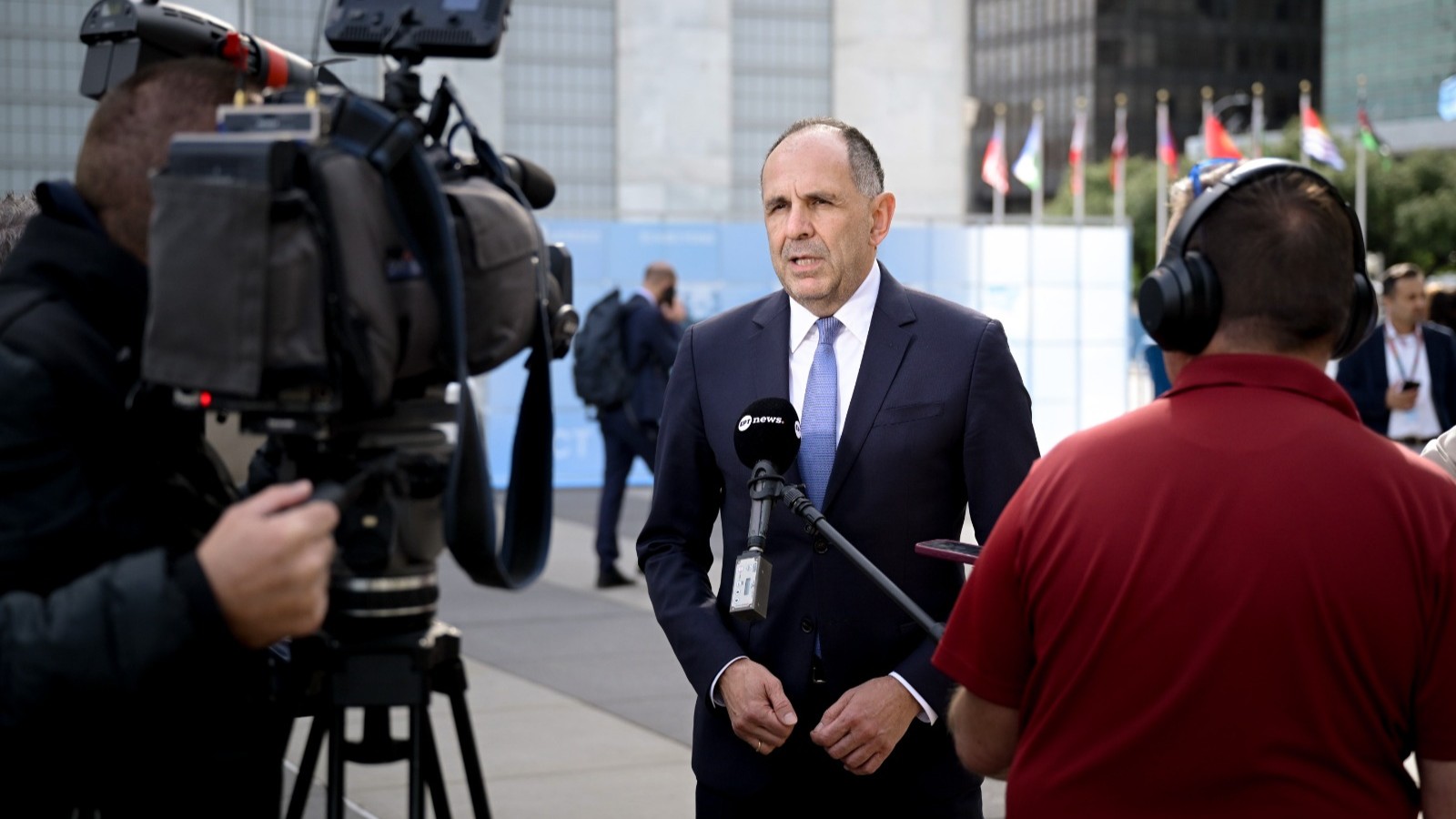
At the United Nations General Assembly, the situation in the wider Middle East and Iran was at the centre of attention.
I had the opportunity to participate in a meeting between the Ministers of Foreign Affairs of the European Union and their counterparts from the wider Middle East, as well as to hold meetings with the Foreign Minister of Iran, the Foreign Minister of Pakistan, and the Foreign Minister of Bahrain.
What is evident is the need for an immediate cessation of hostilities and for the full restoration of the freedom, and safety of navigation. Failure to fully restore maritime corridors poses a serious threat not only to global security, but also to food security and the entire global energy supply chain.
We also had the opportunity, during the General Assembly, to discuss issues of regional security with my counterparts. I held discussions with the Minister of Foreign Affairs of Algeria, the Minister of Foreign Affairs of Colombia and the Dominican Republic as well as a number of other counterparts. These meetings were intended to highlight the great importance of interregional cooperation, at a time when crises are raging around the world and call for a more substantial response to geopolitical challenges, through greatly enhanced cooperation.
In this context, I also held talks with the President of the General Assembly, mainly on issues related to the structure, organization, and decision-making process within the United Nations. Multilateralism is a major priority. International Law must not give away to force.
Greece, as a strong member of the United Nations Security Council and with its Presidency of the Council commencing next month, will work to strengthen all of these principles and especially multilateralism. Greece is expanding its diplomatic footprint, is active around the world, and is strengthening its diplomatic partnerships.
September 23, 2026